 Login
Login
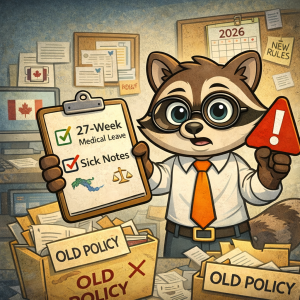
Big Sick Leave Changes You Need to Know for 2026
Heads up, Rascals — governments across Canada quietly rewired sick leave and medical leave rules in 2025. This isn’t optional. This isn’t “nice to have.” And yes, some of your old policies are now officially dinosaurs.
Here’s what changed, in plain English.
By the end of 2025, most provinces have aligned long-term medical leave with EI Sickness Benefits. Translation: employees can now take up to 27 weeks of unpaid, job-protected leave for serious illness or injury.
This applies in:
Important:
Reaching 27 weeks does not mean automatic termination. Human rights accommodation obligations may still apply beyond that point.
Several provinces have tightened (or removed) employers’ ability to demand doctor’s notes for short-term illness. The era of “prove you had the flu” is ending.
What this means in practice:
Bottom line: blanket “doctor’s note required” language is now a legal risk in multiple provinces.
Most compliance issues we see aren’t from bad intentions — they’re from outdated policies being enforced after the law has changed. That’s how you end up with:
The good news? We already fixed it for you.
Here’s your checklist:
That’s it.
You do not need to announce these changes to staff.
These are administrative, statutory requirements — not discretionary perks or policy “enhancements.”
Governments made sick leave longer.
They made sick notes harder to demand.
And they expect employers to keep up.
That’s literally why RascalHR exists.
Log in. Update the policies. Stay compliant.
We’ll handle the rest.
If you want help, reassurance, or a second set of eyes — you know where to find us.
— RascalHR
Taming HR chaos so you don’t have to.