 Login
Login
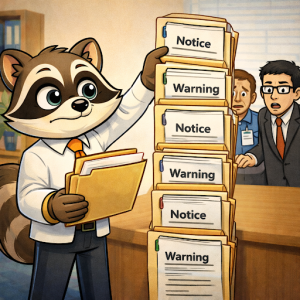
Bob was a problem. Everyone knew it.
Late constantly. Attitude issues. That incident with the client you’re still apologizing for.
You finally pulled the trigger. Terminated for cause. No severance.
Two weeks later, a lawyer’s letter arrives disagreeing with your assessment of “cause.”
Turns out “everyone knew he was terrible” is not a legal standard in Canada.
Just cause for dismissal is the highest bar in Canadian employment law — not a casual one.
It means the misconduct was so serious it fundamentally destroyed the employment relationship. Courts treat termination for cause like “capital punishment” in employment law — used sparingly, and only when truly justified.
Examples that can qualify for just cause dismissal:
Examples that usually don’t qualify for just cause:
Bob showing up late and being difficult? Not cause. Bob being rude to clients? Probably not cause either — unless you built the case properly.
For most misconduct short of the serious stuff, courts expect documented progressive discipline before termination for cause.
The escalation looks like this:
Informal coaching → written warning → final written warning → termination
Skip steps? No cause. Even if Bob’s behaviour was genuinely bad.
“We told him verbally lots of times” doesn’t count in wrongful dismissal cases. No paper trail means no case for just cause dismissal.
And Bob’s lawyer knows it.
“Everyone on the team can vouch for his behaviour.” Irrelevant without documentation. Courts don’t poll your staff.
“He signed a performance improvement plan.” Was it formal? Was it documented? Did he get a fair chance to improve? If you can’t prove it, it didn’t happen.
“We gave him warnings.” Verbal warnings carry almost no legal weight in termination for cause cases in Canada.
“He knew what he was doing was wrong.” Courts don’t care what Bob knew. They care what you documented.
That’s the difference between firing for cause and losing a wrongful dismissal claim.
When your termination for cause fails, it gets reclassified as termination without cause — and now severance pay is owed.
Common law notice. Potentially months of salary. Maybe more if Bob was senior or had been with you for years.
And if the manner of termination was heavy-handed? Aggravated or punitive damages on top.
Legal costs mount fast even when you eventually win. And if it goes to tribunal? Reputational risk in your industry.
Bob doesn’t just get paid. You get bruised.
Before you terminate anyone for cause in Canada, you need:
A clear code of conduct or behavioural policy — so Bob can’t claim he didn’t know the rules.
Documented warnings at each stage of progressive discipline — dated, signed, specific. “Bob was late three times this week” beats “Bob has attendance issues.”
A paper trail that tells a coherent story — courts want to see escalation, not one bad day that pushed you over the edge.
A termination clause in the original employment contract — limiting severance exposure if cause doesn’t hold up.
Ideally, a quick legal review before you act — not three weeks after Bob’s lawyer calls.
You don’t need to keep bad employees. You just need to fire them the right way.
RascalHR gives you the tools to handle problem employees properly — before they become wrongful dismissal cases:
✅ Code of conduct and behavioural expectations built into your employee policy manual
✅ Employment agreements with enforceable termination clauses as a backstop if cause doesn’t hold
You just need to add your own documentation framework so progressive discipline actually holds up in court
We make it easy to do termination for cause the right way — or protect yourself when you have to do it without cause.
So the next time Bob’s behaviour crosses the line, you’ll have more than frustrated emails and witness statements.
You’ll have a case.