 Login
Login
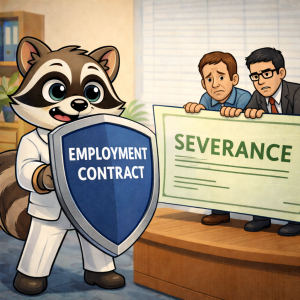
You let Bob go. Finally.
You Googled “severance pay Canada.” You paid two weeks’ termination pay. Done.
Three months later, a letter from Bob’s lawyer lands in your inbox.
That’s the moment you find out there are two severance systems in Canada — and you only knew about one.
Every province has employment standards legislation that sets minimum termination notice. The general rule? About one week per year of service, capped at eight weeks. Ontario throws in a separate severance pay layer for eligible employees (five years of service, $2.5M+ payroll).
This is what Google finds when you search “how much severance do I owe Canada.” This is what most small business owners pay.
And yeah, it’s legally required.
But it’s also just the floor. Not the ceiling.
Bob’s lawyer knows this.
Common law reasonable notice doesn’t come from legislation. It comes from decades of court decisions — and it can reach up to 24 months of full compensation.
Courts decide how much severance you owe based on the Bardal factors:
Real-world example: Bob’s 52, been with you for nine years, managed your biggest accounts. ESA minimum termination pay? Eight weeks. Common law notice range? 12 to 18 months.
And common law notice applies in every province across Canada.
So when you terminated Bob and paid him the statutory minimum, you didn’t close the file. You opened the door to a wrongful dismissal claim.
Bob’s now claiming 16 months. His lawyer says it’s “reasonable.”
A properly drafted termination clause in your employment contract can legally limit severance to ESA minimums. Courts will enforce it — if it’s worded correctly.
Most aren’t.
Vague language. Outdated clauses. Template wording courts have already rejected. One ambiguous word can invalidate the whole termination clause.
And if your termination clause fails? Common law notice kicks in automatically — regardless of what you intended, what you paid, or what you thought you were protected by.
You don’t get a do-over. You get a bill.
Bob gets a cheque. A big one.
“We paid the ESA amount, so we’re covered.” Not if the termination clause doesn’t hold up.
“We’ve used the same employment contract for years.” Laws change. Old clauses get struck down. Courts tighten standards. Your 2015 template might be legally useless in 2026.
“We got it off a template site.” Templates aren’t drafted for your province. They’re not updated for evolving case law. And they’re definitely not reviewed by someone who knows what courts are rejecting this year.
“We didn’t have a written contract at all.” Automatic common law notice exposure. Full stop.
That two-week severance cheque you cut for Bob? It was just the appetizer.
The employment contract you sign on day one determines the severance pay you write on the last day.
RascalHR builds province-specific termination clauses into every employment agreement — clauses that are drafted to actually hold up, not just look official. We don’t pull from templates. We don’t leave gaps. And we auto-update as laws and case law evolve.
So when you let Bob go and pay ESA minimums, the termination clause in your contract backs you up. No wrongful dismissal claims. No lawyer letters. No six-figure surprises. Just enforceable protection from the start.
Get employment agreements with termination clauses that actually protect you.