 Login
Login
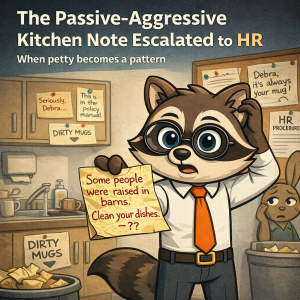
When petty becomes a pattern — and turns into a policy problem
It started with a Post-it.
Scrawled in red Sharpie, stuck above the office sink:
“Some people were raised in barns. Clean your dishes.”
It wasn’t signed, but everyone knew it was Bob.
Bob’s been waging a silent war against communal kitchen messes since 2019.
By Friday, the sink was clean — but the mood?
Frosty.
Debra, who’d been off sick most of the week, came back to find her name scribbled in a follow-up note:
“Your coffee mug doesn’t wash itself, Debra.”
Now Debra’s in your office. Upset. And you’re somehow refereeing a workplace conflict involving dishes, Sharpies, and simmering resentment.
All over a mug.
Welcome to the fine line between petty and toxic.
Bob didn’t mean to upset anyone. He’d probably say he was just being honest.
But here’s the thing: intent doesn’t cancel impact.
When someone repeatedly uses sarcasm, shame, or indirect jabs to communicate — especially publicly — it starts to erode trust. It creates social tension, cliques, and passive hostility.
That’s not “quirky.”
That’s how workplace culture goes sideways.
And when a pattern forms? It’s not just a vibes problem. It’s an HR one.
A single offhand comment? Coachable.
But repeated behaviours that:
…aren’t just annoying. They’re organizational risk.
Especially when they start with dishes and end with team members requesting transfers, taking stress leave, or filing formal complaints.
If a behaviour is:
✅ Repeated
✅ Disruptive to team dynamics
✅ Delivered in public or indirect ways
✅ Hard for the recipient to address without escalating conflict
…it’s time to step in.
Bonus flag: if someone says, “That’s just how they are” — it usually means people have already tried to ignore the issue. That’s not a personality trait. That’s avoidance.
These aren’t legal problems (yet). They’re clarity problems.
And most leaders don’t act because they’re not sure:
That’s why Rascal builds communication expectations into:
✅ Respectful Workplace Policies
✅ Clear Codes of Conduct
✅ Easy-to-use disciplinary language (without going nuclear)
We help you set the tone, enforce the standard, and intervene before the Post-its multiply.
If you’re waiting until someone files a formal complaint, you’ve waited too long.
That tiny passive-aggressive note?
It’s not about dishes.
It’s about discomfort, avoidance, and power dynamics — and if you let it slide, you’re training the team to solve problems with snark instead of conversation.
RascalHR gives you the tools to call it early, coach it clearly, and protect your culture without overreacting.
???? Want help drafting those communication standards? We’ve got you.