 Login
Login
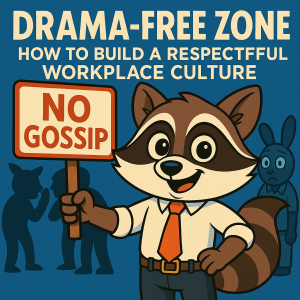
Respect isn’t a value you frame and hang in the break room.
It’s a choice you make 100 times a day.
And when you build a team full of people who make that choice? You don’t need policies. You barely need process. Work just… works.
But that’s not most teams.
Most teams have a Bob.
Bob was good at his job. Sales came in. Deals got closed.
But Bob also rolled his eyes in meetings. Talked over people. Laughed when someone got flustered presenting.
He didn’t yell. He wasn’t overtly cruel.
But over time, people stopped speaking up around him. New hires avoided him. And your best manager quietly started updating her LinkedIn.
By the time Bob left (not by choice), the damage was done.
Here’s the thing: Respect isn’t about who yells the loudest.
It’s about who feels safe to show up — and who doesn’t.
This isn’t complicated.
Respect means:
Low bar? Maybe. But it’s the foundation everything else is built on.
Most disrespectful cultures aren’t built on purpose.
They’re the byproduct of looking the other way.
Here’s how it usually goes:
→ You avoid the tough conversation because “now’s not the right time”
→ You make excuses for Bob because he’s “just direct”
→ You praise outcomes but ignore how they were achieved
→ You laugh off a rude comment instead of shutting it down
Every single one of those moments sends a signal.
And that signal spreads faster than whatever’s gathering dust in your employee handbook.
Culture isn’t what you say in the all-hands meeting.
It’s what you tolerate on Tuesday at 2pm.
You don’t need a 10-step plan. You need to shift the daily default:
This stuff compounds.
It tells your team: This is how we treat each other here.
People copy what gets noticed.
If you quietly let Bob talk over everyone, you’ll get more Bobs.
If you recognize someone for handling a tough conversation with grace? That spreads too.
So be specific:
“Thanks for looping in operations before that decision — made it way smoother.“
“You asked a hard question respectfully, and it helped us make a better call.”
Call it out when it happens. Quietly if needed. Publicly when it helps.
But don’t ignore it.
If you expect one person to “own” culture, it will fail.
Culture is shaped by the group. Every person on the team either contributes to the tone — or corrodes it.
That means:
You don’t need slogans.
You need collective ownership.
Want to rot a team from the inside?
Let gossip fester.
Not “chatting at the watercooler” gossip — real, corrosive side-door commentary that erodes trust.
Bob doesn’t bring up his issue in the team meeting. He slinks over to Dave afterward and says, “Did you hear what Jenna said? Unreal.”
Sarah doesn’t give feedback directly. She vents to the new hire, who now feels trapped in a middle they didn’t ask for.
The manager listens, nods, doesn’t intervene — and it happens again next week.
If you haven’t already, read this: Stop Gossip at Work. We break down exactly how to write a respectful workplace policy that bans gossip without becoming the fun police.
The short version?
If you don’t define gossip — and hold people accountable for it — it becomes the team’s backchannel operating system.
Respect requires clarity. And sometimes, that means calling out what isn’t okay just as loudly as what is.
Don’t overcomplicate this.
A few signals tell you everything:
If your culture isn’t trending toward more clarity, trust, and collaboration… something’s off.
And you already know what it is.
Build a culture of respect, and here’s what shows up instead:
Speed — because people aren’t navigating politics
Trust — because feedback is safe, not weaponized
Accountability — because expectations are clear and enforced
Retention — because your best people don’t burn out managing Bob
This isn’t about slapping values on the wall.
It’s about creating a team you actually want to come back to on Monday morning.
One where people show up, speak up, and give a damn.
No gossip. No drama. No Bobs.
You shouldn’t be building a respectful workplace policy from scratch at 9pm on a Sunday.
Or guessing whether your employee handbook is actually enforceable.
Or wondering if “We don’t do that here” will hold up when Bob’s behaviour finally crosses the line.
RascalHR gives you:
✓ Province-specific respectful workplace policies that actually work
✓ Clear guidelines on gossip, conduct, and accountability
✓ Templates that update when the law does — so you don’t have to
✓ And a cheeky little raccoon who’s got your back
Build the culture you want. Protect the business you’ve built.
Log in to RascalHR and put respect into action.