 Login
Login
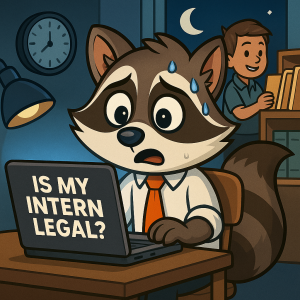
You’re lying on the couch.
A rerun’s playing in the background. You’re scrolling LinkedIn when you see someone’s post: “It’s time we stop exploiting unpaid interns.”
You pause.
Your stomach sinks.
Because you have one.
And… yeah. They’re unpaid.
You called it a “volunteer internship.” They started last week.
Now you’re Googling employment standards, trying to understand if you’ve accidentally broken the law — or just toeing a very grey line.
Welcome to the club. Every small business owner has been here at least once.
Let’s get something clear right out of the gate:
What you call them doesn’t matter.
“Intern,” “volunteer,” “apprentice,” “student helper” — none of those titles change the legal test.
If the person is doing real work, during set hours, under your direction, and they’re not part of a formal school program?
There’s a good chance you’ve just created a job… and forgotten to pay for it.
That “volunteer” label?
It’s the HR equivalent of calling a raccoon a cat because you like it better. Doesn’t hold up.
Here’s the ugly truth: most unpaid internships in Canada are illegal.
The exceptions are narrow. Usually, the person must be:
And even then? You still need to follow certain rules.
If your intern isn’t in that bucket, and they’re:
…you’re likely on the hook for minimum wage, vacation pay, and all the other protections that come with being a regular employee.
Even if they were thrilled to come work for you for free.
Unpaid internships might seem like a clever solution when you’re short on budget and long on projects. But the second it crosses into “employment” territory, you’re gambling with real money.
If the intern complains — or just casually mentions their role to someone who knows the rules — you could face:
This happens more than you think.
And interns? They talk. They text. They post screenshots.
The good news: you’ve got options.
Interns can be amazing — smart, curious, motivated.
But if they’re working, they’re workers. And the labour board won’t care how tight your budget is when they come knocking.
Usually not. The exceptions are narrow: generally, the intern must be enrolled in a school program with a formal work placement, earn academic credit, and do work tied to a learning objective, with documentation between the school, employer and student. Outside that, someone doing real work under your direction is likely an employee.
No. Titles like intern, volunteer, apprentice or student helper don’t change the legal test. If the person is doing productive work, on a regular schedule, under your direction, and isn’t part of a formal school program, you’re likely on the hook for minimum wage, vacation pay and other employment protections.
You can be ordered to pay back wages, sometimes months’ worth, and face fines or penalties from Employment Standards. A complaint can also lead to an audit that digs much deeper into your other practices, and interns often share their experiences publicly.
We don’t judge. We don’t lecture. We don’t forward your name to the ministry.
We just fix it.
Our employment agreements, compliance checklists, and contract templates are built for Canadian employers. We ask the right questions, write the right docs, and make sure you don’t get bit by what you didn’t know.
If you’ve got that Sunday night feeling that something’s not quite right… you’re probably right.
Let’s fix it before someone else decides to.